Skip to yearly menu bar Skip to main content


Tutorial

Machine Unlearning, Privacy, and AI Governance: Exploring Connections, Understanding Limitations, and Interrogating Policy Assumptions

Mar 6, 12:00 PM - 4:00 PM AZ Ballroom Salon 10-11
Can computer vision and multimodal systems forget? Machine unlearning is often discussed in the context of privacy – particularly as a response to data removal requests in relation to Europe’s General Data Protection Regulation’s right to be forgotten. However, computer vision and computer science technologists rarely have the opportunity to engage directly with privacy and AI governance policy experts in Machine Unlearning (MU) discus- sions. This tutorial changes that! By bringing together researchers with MU technology expertise and others with privacy and AI governance policy expertise the tutorial aims to improve understanding between both groups. Expect presentations of cutting-edge MU approaches and active Q&A and discussion periods including about policy implications and limitations. Invited speakers include ‘YZ’ Yezhou Yang, associate professor, School of Computing and Augmented Intelligence at Arizona State University and Kairan Zhao, PhD candidate and teaching assistant in Machine Learning at the University of Warwick.
Speaker
Kate Kaye

Kate Kaye

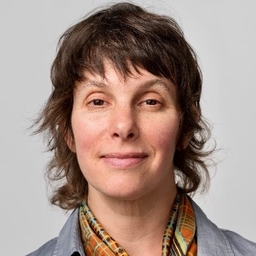
Kate Kaye joined World Privacy Forum as its deputy director in February 2023. In her role she focuses on national and global work on AI and machine learning, digital identity ecosystems, health data ecosystems, digitalization and related impacts, development and data, and WPF’s ongoing work on data governance. Before joining WPF, Kate worked for more than 20 years as an award-winning journalist covering emerging technology, data privacy, and governance issues. Her reporting has been seen and heard in outlets including MIT Technology Review, NPR, Protocol, Bloomberg CityLab, OneZero, WSJ and Fast Company. Through her staff reporting roles covering how business enterprises build and use AI software at Protocol, how marketers use consumer data at Ad Age, and tracking tech platforms and data privacy for Digiday, Kate developed a strong practical knowledge of how emerging data-centric technologies operate and how they’re used on the ground. Kate’s reporting exposed the earliest forms of online political microtargeting and voter data use, explained the connectivity of data broker systems, and monitored the gradual expansion of location data profiling. Her journalism has evaluated the impacts of AI and surveillance technologies on civil liberties and digital justice, and kept a watchful eye on government AI investments and policy. She is also the author of the groundbreaking book on digital voter data use, Campaign ’08: A turning point for digital media. Kate has won several journalism awards including a Society of Professional Journalists First Place Technology Award in 2019 and an American Society of Business Publication Editors Silver Award in 2011. She was a Society of American Business Editors and Writers finalist in 2014 and was the recipient of a Society of Environmental Journalists grant in 2020. She has been interviewed for a variety of media outlets including NPR’s Weekend Edition Sunday, Public Radio’s Science Friday, and WNYC’s Brian Lehrer Show and On the Media, as well as Fox’s Stossel Show.
View full details
Tutorial

Beyond Vision: Multimodal Perspectives for Cross-View Geo-Localization

Mar 7, 7:30 AM - 11:00 AM AZ Ballroom Salon 9
The increasing availability of geospatial data from heterogeneous modalities, including aerial and satellite imagery, ground-level views, and textual descriptions, has made cross-view geo-localization a critical research area with applications in autonomous navigation, urban monitoring, and augmented reality. Despite progress, challenges remain in handling extreme viewpoint variations, scaling across diverse domains, and integrating multimodal information. Recent developments in multimodal learning and Generative AI, such as Large Multimodal Models (LMMs), have introduced new paradigms for geo-localization. LMMs enable more generalized cross-view matching by incorporating language as an additional modality, supporting tasks such as text-based geo-localization, scene description, and multimodal reasoning. These capabilities not only improve performance but also expand the scope of cross-view geo-localization to broader multimodal applications. This tutorial will provide a comprehensive overview of these developments, highlighting the latest methodologies, datasets, and open research directions that are shaping the future of cross-view geo-localization
Speakers
Chen Chen

Chen Chen

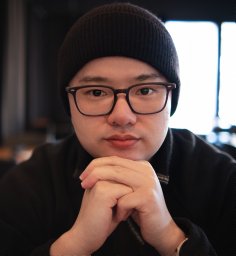
My research focuses on multimodal artificial intelligence, computer vision, and efficient learning systems, with an emphasis on large-scale foundation models, human-centric AI, federated and privacy-preserving learning, and high-impact applications in healthcare, public safety, remote sensing, and agriculture.
Xiaohan Zhang

Xiaohan Zhang

I am a Ph.D. candidate at the University of Vermont, advised by Dr. Safwan Wshah. Before joining the University of Vermont, I received my M.Sc. degree at the University of California, Santa Cruz in 2020, and I obtained my B.Sc. degree at Michigan State University in 2017. My current research interest lies at the border of computer vision and remote sensing. I am also interested in Generative AI and 3D reconstruction. Currently, I am expanding my expertise by applying Generative AI to computational biology.
Safwan Wshah

Safwan Wshah

Dr. Safwan Wshah is currently an Assistant Professor in the Department of Computer Science at the University of Vermont. His research interests lie at the intersection of machine learning theory and its applications to healthcare, transportation and energy. He also has broader interests in deep learning, computer vision, data analytics and image processing. Dr. Wshah received his Ph.D. in Computer Science and Engineering from the University at Buffalo in 2012. Prior to joining University of Vermont, Dr. Wshah worked for Xerox and PARC (Palo Alto Research Center)- Xerox company, where he was involved in several projects creating machine learning algorithms for different applications in healthcare, transportation and education fields.
View full details

No Events Found

Try adjusting your search terms